Every May, two awareness campaigns quietly overlap in a way that feels more important than ever: Mental Health Awareness Month and National Walking Month.
At first glance, they sound unrelated. One belongs to therapy rooms and difficult conversations. The other sounds like a step-counting challenge sponsored by sensible trainers.
But what if walking isn’t just exercise…what if it’s a medicine we forgot we had?
Your Nervous System Thinks You Still Live in the Wild
Modern humans are strange creatures.
We answer emails while eating lunch. We sit indoors under artificial light for 90% of the day. We scroll through bad news before bed and call it “winding down.”
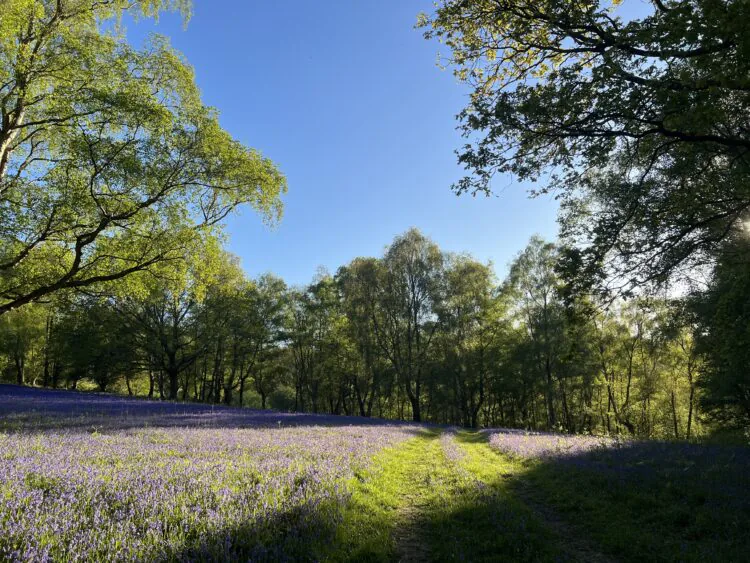
Yet biologically, your nervous system still believes you are a human animal designed to move through forests, coastlines, changing weather, birdsong and sunlight.
No wonder anxiety feels so loud indoors.
Research consistently shows that walking, especially in nature, can lower cortisol, improve mood, regulate the nervous system, reduce symptoms of anxiety and depression, and improve sleep. But beyond the science, something more interesting happens when we walk…we stop performing.
Walking gives the brain a rhythm. Thoughts untangle. Conversations soften. Breathing deepens naturally. Problems stop echoing quite so loudly.
There’s a reason people say:
- “I just needed some air.”
- “I had to clear my head.”
- “I walked it off.”
Your body already knows what your mind is trying to learn.
The Japanese Have a Word for It
In Japan, there’s a practice called Shinrin-yoku (“forest bathing”)
Not hiking.
Not fitness.
Not tracking calories.
Developed in the 1980s as a preventative health practice, it is simply the practice of spending mindful, slow-paced time in nature to improve mental and physical health by engaging all five senses.
Studies on forest environments have shown reductions in stress hormones, blood pressure and mental fatigue. Trees release compounds called phytoncides, which may even influence immune function and relaxation.
But perhaps the real healing comes from something simpler:
Nature asks nothing of you.
No productivity.
No performance.
No notifications.
No “quick catch-up.”
Just movement. Breath. Space.
Walking Is One of the Few Places We Still Think Naturally
Have you ever noticed how difficult conversations become easier side-by-side instead of face-to-face?
Walking changes the way humans communicate.
Therapists, philosophers, poets and creatives throughout history have walked to process emotion and access clarity. Even neuroscience suggests bilateral movement (the rhythmic left-right motion of walking) may help emotional processing and cognitive flexibility.
This may explain why some of your best ideas arrive:
- on a beach walk,
- walking the dog,
- pacing the kitchen,
- wandering aimlessly after a hard day.
Movement changes thought.
Stillness is not always calming for an overwhelmed nervous system. Sometimes healing begins with gentle motion.
The “Third Spaces” We’ve Lost
Years ago, people naturally walked more because life required it.
You walked to the shop.
Walked to neighbours.
Walked to school.
Walked while talking.
Now many of us move from chair → car → chair → sofa.
And alongside that, loneliness has risen sharply.
Walking used to create accidental connection:
- greeting strangers,
- seeing familiar faces,
- bumping into friends,
- feeling part of a community.
Mental wellbeing doesn’t only come from “self-care.”
It also comes from feeling human among other humans.
Even a short daily walk can interrupt isolation in surprisingly powerful ways.
Tiny Ways to Walk for Mental Health This May
Forget perfection. The nervous system responds to consistency, not intensity.
Try:
- A 10-minute walk before checking your phone in the morning
- Walking without headphones once a week
- Choosing the longer route home
- Watching a sunset instead of a screen
- Walking meetings or catch-ups with friends
- Barefoot grounding on grass or sand
- Visiting somewhere green you’ve never explored before
- Walking when stressed instead of doom-scrolling
You do not need to “smash goals.”
You just need to move like a human again.
When Walking Isn’t Enough
Of course, movement alone cannot solve everything.
Sometimes stress becomes chronic. Anxiety sits deeply in the body. Grief, burnout or emotional overwhelm need more support than a walk around the block.
That’s where holistic therapies can make a profound difference – helping both mind and body feel safe again.
At Gatehouse Health, we believe mental wellbeing is never “all in your head.” The nervous system lives throughout the entire body, which is why physical and emotional therapies often work beautifully together.
Therapies That Support Mental Wellbeing
Counselling
Sometimes the most healing thing is being truly heard.
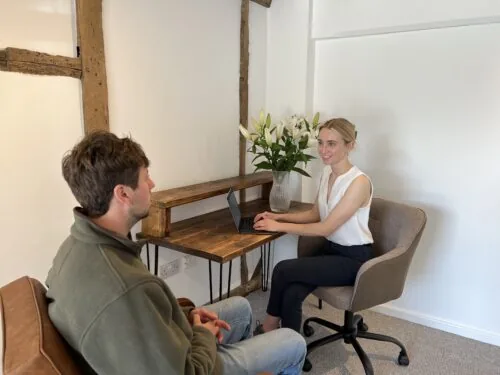
Counselling provides a safe, confidential space to process anxiety, stress, grief, overwhelm, relationship challenges or simply the mental load of modern life. Talking therapy can help untangle patterns, create emotional resilience and bring clarity during difficult seasons.
Therapeutic Massage
Stress doesn’t just live in thoughts – it settles into muscles, breathing patterns and posture.
Therapeutic massage can help calm the nervous system, reduce physical tension, improve sleep and create a deep sense of relaxation and emotional release. Many people don’t realise how much anxiety they are physically holding until it finally softens.
Reiki
Reiki offers a gentle, restorative approach for those feeling emotionally depleted, overstimulated or disconnected.
Clients often describe feeling calmer, lighter and more balanced afterwards, as though the body has finally shifted out of “survival mode.”
Craniosacral Therapy
This subtle yet powerful therapy focuses on the nervous system and the body’s natural rhythms.
Craniosacral therapy may help people experiencing stress, headaches, fatigue, tension, overwhelm and emotional burnout by encouraging deep relaxation and supporting the body’s ability to self-regulate.
This May, Don’t Just Count Steps
National Walking Month doesn’t have to become another challenge to optimise yourself.
Maybe this month is simply about remembering:
- your body was designed to move,
- your mind needs rest from stimulation,
- nature still heals,
- and support is allowed.
Sometimes wellbeing starts with something beautifully ordinary:
A slower walk.
A deeper breath.
A conversation.
A moment of quiet.
A nervous system finally feeling safe enough to exhale.